
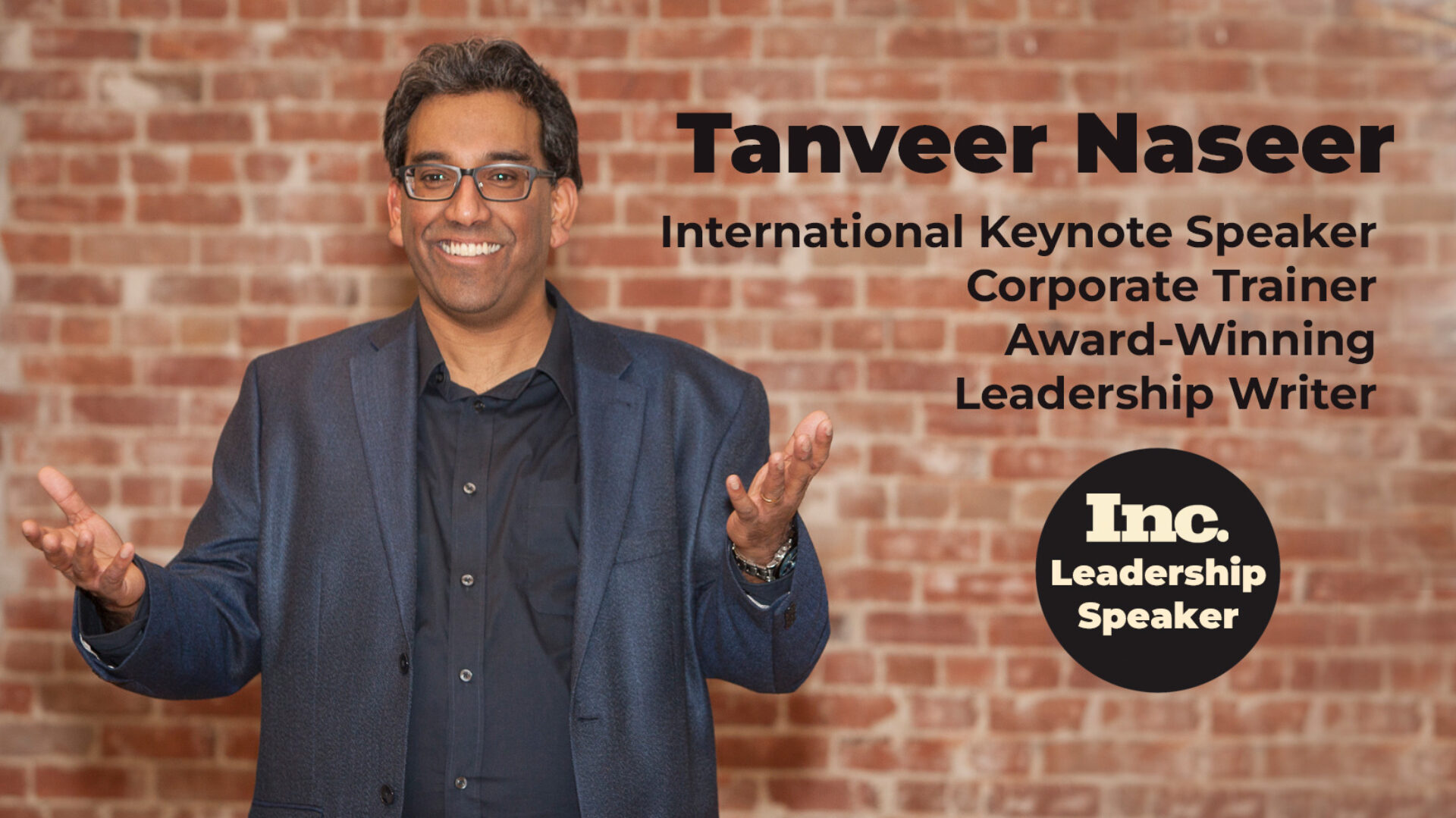








Meet Tanveer Naseer, Internationally acclaimed leadership expert and keynote speaker
Tanveer Naseer is an internationally-acclaimed keynote and TEDx speaker, award-winning leadership writer, author, and CEO of Tanveer Naseer Leadership, a leadership corporate training and consulting firm. Tanveer has received numerous awards and recognitions for his work in the leadership sphere, including being recognized by Inc. Magazine as one of the “Top 100 Leadership and Management Experts” as well as one of their “100 Great Leadership Speakers”.
His book, “Leadership Vertigo” is available in bookstores and online book retailers.
Our Services
Speaking
Tanveer gives inspiring and thought-provoking talks that leave audiences with actionable steps they can put into action right away to improve the way they lead.
Corporate Training
Tanveer leads half-day workshops to help leaders and their teams become better communicators, working more collaboratively, and create a workplace that doesn't simply engage, but empowers employees to bring their best to work.
Consulting
Tanveer offers leadership consulting in both one-on-one and team settings to help leaders address the current challenges they face and devise a road map for how to move forward in achieving their goals.












Testimonials
Tanveer Naseer's briefing on cultivating empathy to strengthen connections was incredibly valuable to 1 CMBG. His insights provided a profound understanding of the importance of empathy in fostering strong connections, and we gleaned significant insights from his presentation. Was great to have you out in Shilo!
Lt Colonel Joe O’Donnell Commanding Officer 1RCHA
We were fortunate enough to welcome Tanveer to Henkel, to deliver an inspiring virtual keynote to over 400 of our colleagues globally. Tanveer’s energy, enthusiasm and expertise was incredible. He captured our audience during his 45 minute session, leaving them feeling empowered and with actionable takeaways. We’ve received excellent feedback and hope we get the chance to work with Tanveer again.
Rachael Rowland Head of Cultural Transformation & DEI (Global Beauty Care), Henkel
Tanveer’s message on keeping your and your team’s focus on your boat crosses my mind from time to time. He addressed it as a keynote speaker at the beginning of the pandemic last year. This is what you should expect from a leadership coach - the message delivered is relevant and resonates not only at the moment but throughout.
Patricia Rangel Head of Global Medicine Strategy and Coordination, Boehringer Ingelheim
Tanveer was an amazing and thought-provoking leadership guest speaker. He brought a new way of thinking into making work a more productive place. Employees left the Speaker Series feeling refreshed!
Thomas Simpson Policy Officer CNSC, Government of Canada
It was a honor to have Tanveer as a keynote speaker at Henkel. With his clear and objective way of talking about leadership and empathy Tanveer supported our leaders and teams in a crucial moment. I am looking forward to having some other opportunities to interact with Tanveer and bring his knowledge and great way of thinking to our leaders and colleagues.
Fernando Mazzuli Global Learning and Development Manager, Henkel
I had the opportunity to enjoy your presentation, "No More Workplace Zombies: Keys to Creating Employees Who Care" in Utah. Your presentation generated excitement and some creative avenues to get our associates/managers re-invested at their job, and even spill over into home. You definitely created a stir!
Dana Ketchum Engineering Manager, Dillard's
Thank you for coming to Boston Children’s to do your talk. You made a great impact on many of us. I’ve spoken about you and your talk with my Director and he’s impressed. This week I will be sharing with one of our management teams, my experience from your talk. I am definitely looking forward to having you return to Boston Children’s in the future.
Angela Thomas Patient Support Services’ Program Administration Manager, Boston Children's Hospital
Tanveer is great to work with - he took the time to get to know our organization and what our leaders wanted to learn. By doing so, he was able to customize his keynote and his following sessions to meet the needs of our organization. Our leaders enjoyed getting to know him more and continuing to learn from him through informal conversation. Thanks Tanveer for coming to share your leadership insights!
Jessica Luh Kim Director of Education & Program Development, Schelegel Villages
As a co-chair for the NextGen Leaders Employee Resource Group at CMHC, I had the opportunity to interact with and co-host Tanveer to talk to us about empathy and leadership, and how to strengthen connections and improve delegation. Tanveer is a dynamic speaker who can captivate audiences with his impeccable story telling style of delivering key leadership snippets. Across our interaction, Tanveer had been accommodating with our varied administrative requests and most of all with content delivery personalized to help us bring better insights to our colleagues at CMHC. I would highly recommend Tanveer as a speaker on all things leadership.
Kartik Krishnan Co-Chair, NextGen Leaders Employee Resource Group, CMHC
The Boston Children's Hospital leadership community had the good fortune of having Tanveer as a guest speaker for our Management Grand Rounds Speaker Series.
Tanveer was a passionate presenter and provided excellent insight into his theories of leadership.
Alan Paret Senior Leadership Development Specialist, Boston Children's Hospital
Tanveer is a gifted thought leader and talented presenter on the subjects of leadership, coaching, and building relationships. Tanveer has been generous with his time and each instance that I have enjoyed a conversation with him I come away inspired to do my best. Anyone looking for a speaker or author to engage an audience can do no better than to ask for Tanveer Naseer.
Andrew Bateman Community Manager, Organizational Development and Leadership Practice, Human Capital Institute
We used Tanveer as the keynote speaker for our NAED’s LEAD Conference for our up-and-coming professionals within our industry. Tanveer was great to work with from Day 1, well prepared for his keynote to our group, punctual, outgoing, great pace, very professional in working with him! Would recommend him as a leadership-focused speaker!
Brian Peters Regional Manager, NAED
Tanveer Naseer was an invited speaker for us at the sold out PMI NJ Annual Symposium, speaking on Leadership Vertigo. The room was packed with over 200 interested attendees right through the end. We enjoyed having Tanveer as a guest speaker, he invited dialogue throughout the 24 hours he was with us and we would highly recommend him for similar speaking engagements in the future.
Carl Pflanzer MBA, PMP, PMI-NJ
Tanveer Naseer's TEDx Talk:
Forget Passion - Purpose is the Real Spice of Life
Is passion all we really need to be happy and successful? In this engaging and humorous talk, Tanveer Naseer shares two personal stories that reveal how purpose leads us to the life we were meant to live.