TanveerNaseer.com

Business Coach and Writer

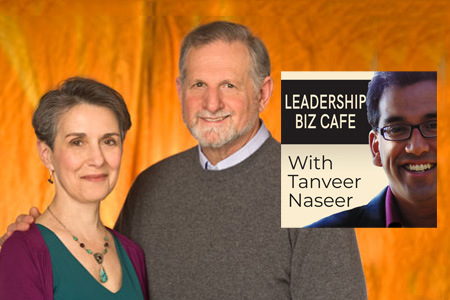
Leadership Biz Cafe Podcast #2 – Interview with Teresa Amabile & Steven Kramer

For the second episode of my podcast series, “Leadership Biz Cafe”, I’m pleased to welcome Teresa Amabile and Steven Kramer. Teresa is the Edsel Bryant Ford Professor of Business Administration and a Director of Research at Harvard Business School. Steven is a developmental psychologist whose writings have appeared in such illustrious publications as the Harvard Business Review and The New York Times.

In this episode, we discuss their research findings which serve as the basis for their new book “The Progress Principle: Using Small Wins to Ignite Joy, Engagement, and Creativity at Work”.

Over the course of the discussion, Teresa and Steven describe:

  • What is inner work life and why leaders need to pay more attention to it.
  • What is the progress principle and why does it matter in today’s work environment.
  • Why leaders need to provide employees with responsibilities that create a sense of purpose or meaning.
  • How experiencing setbacks can be more damaging to employee morale than leaders realize.
  • What actions leaders should avoid to prevent a loss of productivity from their employees.
  • What leaders should be managing, as opposed to what they think they should be managing, to encourage productivity in their organization.
  • What two other factors leaders can employ to improve employee performance over the long-term.
  • How leaders and employees can help facilitate a shift toward the creation of meaningful work.

As I told Teresa and Steven during our conversation, “The Progress Principle” is easily one of the best books I’ve read this year on leadership and improving an organization’s productivity. I invite you both to listen to this podcast and to check out their book to find out why I so thoroughly enjoyed reading “The Progress Principle”, as well as talking with them about the discoveries they made through their research on the challenges employees face in today’s workplace.

Click on the player below to listen to the podcast:

Audio clip: Adobe Flash Player (version 9 or above) is required to play this audio clip. Download the latest version here. You also need to have JavaScript enabled in your browser.

Buy Teresa Amabile and Steven Kramer’s book “The Progress Principle” on Amazon.com (or Amazon.ca for Canadian readers)

What My Kids Taught Me About Inspiration and Execution

The sand castle city my daughters built on the beach at the summer cottage

Growing up, the month of August was always a bittersweet time of the year. On the one hand, it signalled that the end of summer was fast approaching and with it, the return to the school routine of homework and earlier bedtimes. At the same time, though, August also seemed to be the month where the summer break began to drag as all the activities we’d planned to do were done and there seemed to be nothing left to do.

Perhaps that’s why the way my daughters spent their summer vacation this year stood out in my mind so much – there was probably only one day where they sat deflated on the couch, bemoaning how they were bored because there was nothing to do.

Now this wasn’t because we had every day of their summer break planned and filled with activities to keep them busy. As a matter of fact, just a few days ago my girls pointed out to me how we didn’t get to do some of the activities I had suggested as possible summer activities way back in June before the school year ended.

Granted, the weather we had this summer was exceptional, providing us with the kind of summer-like conditions we haven’t seen in the past few years. Faced with sunny skies and warm temperatures, it’s not hard to see why Click here to continue reading »”What My Kids Taught Me About Inspiration and Execution”

3 Steps To Transform Passion Into A Fulfilling Sense of Purpose

Passion key to purpose

Last week, I wrote about why it’s important that bosses take time off from work to go on vacation. It certainly was a timely piece and I’m grateful to see the enthusiastic response it garnered here in the blog comments section, on the various social networks, as well as being picked up as one of the top stories in last Friday’s SmartBrief on Leadership newsletter.

In that piece, I wrote that one of the reasons why leaders need to take a vacation is to “lead by example” in showing those under their stewardship how critical it is to take care of ourselves if we are to remain effective in our role. In an example of following the advice I share here on my blog, I’m taking a break from writing a new piece this week (along with a minimal presence online in general), in part to allow myself time to reflect on the ideas I want to share here in the coming weeks, as well as to prepare for a new feature I hope to launch on my site next week.

However, I don’t want to leave my readers without something new to read on my blog this week and so, I’m sharing a revised version of one of my blog readers’ favourite pieces I wrote last year. In this piece, I talk about how we can take the passion that fuels our drive to go out and do what we love, and transform it into that sense of purpose which ultimately allows us to succeed at reaching our goals. I hope you’ll enjoy it.

* * * * * * * * * * *

Passion.

It’s something that you hear a lot about these days as one of the keys to success, if not personal fulfillment. Many articles have been written lately on how to harness or foster that passion, including my own piece on how our passions spring forth from our inner strengths. Where we run into problems, though, is when we create this expectation that passion can sustain our drive over the long run. To illustrate what I mean by this, Click here to continue reading »”3 Steps To Transform Passion Into A Fulfilling Sense of Purpose”

Coffee House Book Review – “Workarounds That Work” by Russell Bishop

Attending meetings that are created mostly for people to share with others various updates from their divisions instead of discussing what needs to be done next. A partnership initially created between two companies to allow them to land a large-scale project ends up becoming a source of distrust between the collaborating businesses, leading to costly delays as each side questions the real motives of the other firm. Spending hours in a committee meeting attempting to decide which option should be pursued over others as the least likely to end in failure.

These are just a handful of some of the scenarios that author Russell Bishop delves into, breaks down and provides clear strategies to overcome and hopefully improve on in his new book “Workarounds That Work: How to Conquer Anything That Stands in Your Way at Work”.

From the very beginning of the book, Bishop makes it clear that the key to overcoming any obstacle or challenge that stands before us is ourselves – specifically our own perception or how we choose to frame a given situation. He divides the work environment into three distinct sections – what we can control, what we can influence, and what we simply respond to – and points out how most times, our focus is on what we respond to and not on that which is within our abilities to control and manage.

Working from this vantage point, Bishop describes three key steps that readers can take to ensure any change or improvement they put forth is more than a mere band-aid solution: Click here to continue reading »”Coffee House Book Review – “Workarounds That Work” by Russell Bishop”

« Older Entries

Scotty-in-Jefferies-Tube